Queer Places:
Princeton University (Ivy League), 110 West College, Princeton, NJ 08544
Evergreen Cemetery, 769 Ella T Grasso Blvd, New Haven, CT 06519, United States
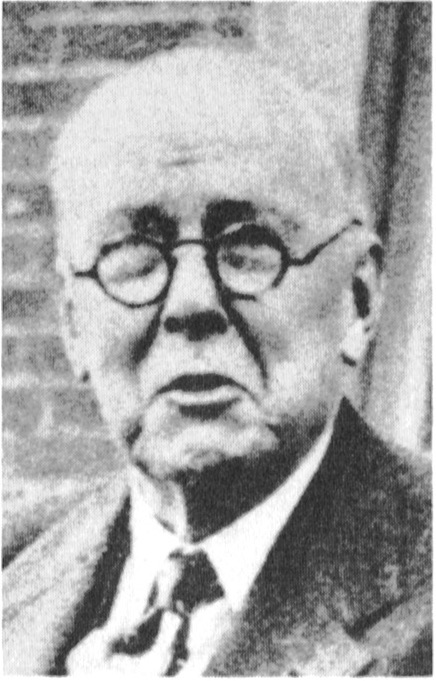 Richard Townley Haines Halsey (August 28, 1865 - February 7, 1942) was born on August 28, 1865, in Elizabeth, New Jersey, to William Forest Halsey and Frances
Evelyna "Fanny" Haines, coming from a well-to-do family whose ancestors had arrived in North America in the 1630s. He graduated from Princeton University
in 1886, after which his father purchased him a seat on the New York Stock Exchange. He maintained a successful career in finance, serving as a member of
the governing board of the New York Stock Exchange from 1900 to 1924 (or beginning in 1899 according to some records), holding roles such as chairman of
the library committee and vice chairman of the quotations committee, before eventually giving up his seat to focus on his curatorial work.
Richard Townley Haines Halsey (August 28, 1865 - February 7, 1942) was born on August 28, 1865, in Elizabeth, New Jersey, to William Forest Halsey and Frances
Evelyna "Fanny" Haines, coming from a well-to-do family whose ancestors had arrived in North America in the 1630s. He graduated from Princeton University
in 1886, after which his father purchased him a seat on the New York Stock Exchange. He maintained a successful career in finance, serving as a member of
the governing board of the New York Stock Exchange from 1900 to 1924 (or beginning in 1899 according to some records), holding roles such as chairman of
the library committee and vice chairman of the quotations committee, before eventually giving up his seat to focus on his curatorial work.
Alongside his financial career, Halsey established himself as a prominent collector, researcher, and writer specializing in American antiques and
decorative arts. He published his first book, Pictures of Early New York on Dark Blue Staffordshire Pottery, in 1899, and later co-authored The Homes of
Our Ancestors in 1925 with Elizabeth Tower. He was actively involved in major early American decorative arts exhibitions, writing the catalog for the 1906
American silver exhibition at the Museum of Fine Arts in Boston and lending pieces to the 1909 Hudson-Fulton Celebration and the 1922 Duncan Phyfe show at
the Metropolitan Museum of Art.
Halsey played a foundational role at the Metropolitan Museum of Art, where he was elected as a trustee in 1914 and became chairman of the Committee on
American Decorative Arts, serving as an unpaid volunteer performing the functions of a curator to help install and develop the American Wing. He also
served for seven years on the Art Commission of the City of New York as a representative of the Museum. Deeply proud of his colonial heritage—his
grandfather having served as an aide-de-camp to George Washington—Halsey viewed the American Wing's period rooms as a way to celebrate early American
craftsmanship, educate the public, and foster civic values and patriotism amidst rapid industrialization and immigration. His connection to the study and
appreciation of American art and history also led to his election as a member of the
Horace Walpole Society in 1914.
Halsey was married to Elizabeth Tower Halsey. Later in life, he lived in New Haven, Connecticut, where he worked as a research assistant at the Yale
University Library. He passed away in February 7, 1942, at the age of 76 from injuries sustained after being struck by an automobile near his home, and
was buried in Evergreen Cemetery in New Haven.
- Birth and Parentage: Born August 28, 1865, in Elizabeth, Union County, New Jersey, to William Forest Halsey (1839–1891) and Fannie Haines Halsey (1844–1876).
- Education and Early Career: Graduated from Princeton University in 1886; obtained a seat on the New York Stock Exchange purchased by his father, serving on its governing board from 1900 to 1924 (or 1899 to 1923), including roles as chairman of the library committee and vice chairman of the quotations committee.
- Publications and Collecting: Authored Pictures of Early New York on Dark Blue Staffordshire Pottery (1899) and co-authored The Homes of Our Ancestors (1925) with Elizabeth Tower; wrote the catalog for the 1906 American silver exhibition at the Museum of Fine Arts, Boston.
- Museum Leadership and The American Wing: Elected as a trustee of the Metropolitan Museum of Art in 1914, serving as chairman of the Committee on American Decorative Arts and performing the function of curator to establish the American Wing. Also served seven years as the Museum's representative on the Art Commission of the City of New York.
- Professional Associations: Elected as a member of the Horace Walpole Society in 1914.
- Marriage and Family: Married Elizabeth Augusta Tower Halsey (1903–1976).
- Later Life and Death: Resided in New Haven, Connecticut, working as a research assistant at the Yale University Library. Died in February 1942 (following injuries sustained on January 20, 1942, when struck by an automobile) at age 76, and was buried in Evergreen Cemetery in New Haven, Connecticut.
Support this project
This website is a passion project researched, developed, and funded entirely by me. If you find the content valuable and would like to help support the ongoing research and hosting costs, any contribution is deeply appreciated.
Thank you for keeping this independent resource alive!
My books on Amazon: Elisa Rolle's books
BACK TO HOME PAGE